
Opposition parties have agreed to the agenda of taking up a special discussion on the Pahalgam terror attack and Operation Sindoor on Monday in Lok Sabha and the next day in Rajya Sabha, brightening up the prospect of normalcy returning to Parliament after the virtual washout of first-week proceedings.

The decision was immediately welcomed by gay rights activists across the country as it reopens the legal debate on homosexuality.

The Delhi High Court has set aside a Central Information Commission (CIC) order that directed the disclosure of information related to Prime Minister Narendra Modi's bachelor's degree.

The Supreme Court on Tuesday referred the issue of legalising euthanasia in the country to a five-judge Constitution bench, saying there has been "inconsistent" opinion in its previous verdicts on withdrawing medical support to terminally ill patients.

Chief Minister Omar Abdullah strongly criticized linking Jammu and Kashmir's political future to acts of terror, asserting that Pakistan cannot influence decisions on the region's statehood through terrorism. He announced a signature campaign to press for the restoration of statehood.
Chief Justice of India D Y Chandrachud has constituted an all-woman bench comprising Justices Hima Kohli and Bela M Trivedi to hear transfer petitions involving matrimonial disputes and bail matters on Thursday.

Emphasising that human rights are the most sacrosanct component of a human life, the Jammu and Kashmir High Court has ordered the Union Home Ministry to facilitate the return of a woman deported to Pakistan following the Pahalgam terror attack.

Tamil Nadu Governor R N Ravi has sparked controversy by asking students at a government-aided college in Madurai to chant "Jai Shri Ram". The State Platform for Common School System-Tamil Nadu (SPCSS-TN) has demanded his removal, alleging that he violated his oath of office and secular principles. The group claims Ravi's actions were against the Constitution, which outlines India as a secular country and emphasizes the importance of upholding secular values in education. The incident follows a recent Supreme Court ruling that overruled Ravi's decision to withhold 10 Bills passed by the Tamil Nadu government, highlighting ongoing tensions between the Governor and the state administration.
The Supreme Court of India will likely hear a batch of petitions challenging the constitutional validity of the Waqf (Amendment) Act, 2025 on April 15. The Act, which came into force on April 8, has been met with widespread criticism from various stakeholders, including politicians, the All India Muslim Personal Law Board (AIMPLB), and Jamiat Ulama-i-Hind. They argue that the law is discriminatory and violates the fundamental rights guaranteed under Articles 25 and 26 of the Constitution. The petitions allege that the amendments give the government more control over the administration of Waqf, effectively sidelining the Muslim minority from managing their own religious endowments.
The court also directed YouTube and a Marathi news channel to forthwith remove the video of the press conference and also restrained them from uploading it in future.

Pakistan's supreme court chief justice Iftikhar Chaudhry constituted a 17-judge bench on Thursday, to hear petitions challenging the amnesty granted to President Asif Ali Zardari and close aides under a controversial law that expired last month.

The government had said on Friday that it would oppose the practice of nikah halala when the top court examines its legal validity.

A bench comprising Justices J B Pardiwala and R Mahadevan said, "He (the governor) seems to have adopted his own procedure. He says, 'I withhold assent, but I will not ask you to reconsider the bill'. It does not make sense to keep withholding assent and not send it to the legislature, thereby frustrating the provision of Article 200."
While India today is vastly different from the India of 1975, the need for vigilance against authoritarianism remains the same, asserts Utkarsh Mishra.
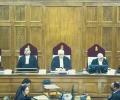
The Supreme Court of India, by a majority view of 3:2, on Monday upheld the validity of the 103rd Constitution amendment providing 10 per cent reservation to people belonging to the economically weaker sections (EWS) in admissions and government jobs.

The Calcutta High Court has ordered the formation of a three-member committee to identify and rehabilitate people displaced by violence during protests over the Waqf (Amendment) Act in Murshidabad district. The court also extended the deployment of Central Armed Police Force (CAPF) in the area. The committee will consist of officials from the National Human Rights Commission (NHRC), West Bengal Human Rights Commission (WBHRC), and the State Legal Services Authority (SLSA). It will be responsible for identifying displaced persons, assessing damage to properties, collecting FIR data, facilitating FIR filing, and overseeing the well-being of displaced individuals. The state government has been instructed to provide necessary infrastructure to the committee and report on its progress by May 15. The court also directed the state to formulate a rehabilitation scheme for displaced persons, including the construction of damaged houses and shops, compensation for lost livelihoods, and protection for families of those who died in the violence.

A five-judge Constitution bench headed by Justice Sanjay Kishan Kaul, in a unanimous verdict, ruled that its 2014 verdict, which had struck down a provision of the Delhi Special Police Establishment (DSPE) Act, 1946 providing immunity to such officers in graft cases, will have retrospective effect.

According to the cause list for December 11, Monday, uploaded on the apex court website, a five-judge constitution bench headed by Chief Justice D Y Chandrachud would deliver the verdict.

The committee said the Uttar Pradesh government did not file appeals against the high court's November 8, 2023 order and instead, an impleadment application was filed in the pending plea before the top court.

The apex court bench, also comprising justices Sanjiv Khanna, BR Gavai, JB Pardiwala, and Manoj Misra, will assemble at 10.30 am to hear the two petitions.
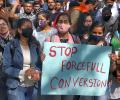
What is the effect of the report of a commission of inquiry that has been rejected or not accepted by the government, and whether the empirical data which formed the basis of the report can be looked at while determining a constitutional issue, the Supreme Court wondered on Wednesday while considering the question of quotas for Dalit Muslims and Dalit Christians.
The bench, headed by Chief Justice D Y Chandrachud, will also hear a separate plea which has sought initiation of contempt action against the SBI alleging it "wilfully and deliberately" disobeyed the apex court's direction to submit details of the contributions made to political parties through electoral bonds to the Election Commission by March 6.

The Supreme Court of India began hearing a batch of petitions challenging the constitutional validity of the Waqf (Amendment) Act, 2025. The bench, led by Chief Justice Sanjiv Khanna, asked both sides to address whether the court should entertain the petitions or relegate them to the high court. The hearing is underway with senior advocate Kapil Sibal arguing for the petitioners. The act, which was passed by Parliament following heated debates, has been challenged by various parties including AIMIM leader Asaduddin Owaisi, All India Muslim Personal Law Board (AIMPLB), and Jamiat Ulama-i-Hind.

He could have blazed a trail that few Indian judges had. It was a missed opportunity of a lifetime, notes Ramesh Menon.

In a judgment of far-reaching implications, the Supreme Court on Wednesday ruled that a Muslim woman can seek maintenance from her husband under Section 125 of the CrPC and said the "religion neutral" provision is applicable to all married women irrespective of their religion.
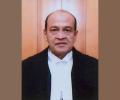
The 56-year-old judge, enrolled as an advocate in 1992, was appointed as an additional judge of the Allahabad high court on October 13, 2014 and took oath as a permanent judge of that court on February 1, 2016.
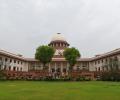
The Indian government has defended the Waqf (Amendment) Act, 2025 in the Supreme Court, arguing that there cannot be a blanket stay on the law as there is a presumption of its constitutionality. The Centre countered the pleas challenging the law's validity, asserting that the amendments were undertaken after a comprehensive study by a parliamentary panel. The government also highlighted the "reported misuse" of earlier provisions and the increase in waqf land, claiming that over 20 lakh hectares were added after 2013.

Disagreeing with the Centre's submission that the petitions seeking legal validation of same-sex marriage reflected an 'urban elitist' view, Chief Justice of India D Y Chandrachud said on Tuesday queerness is not urban or elite, or restricted to upper classes and privileged communities.
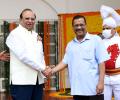
On May 6, the top court had referred to a five-judge Constitution bench the issue of control of services in Delhi.

The State Bank of India told the Supreme Court on Thursday it has provided all details of the electoral bonds in its possession to the Election Commission.

The law prohibits conversion of any place of worship and provides for the maintenance of the religious character of any place of worship as it existed on August 15, 1947.
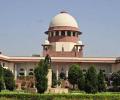
A three-judge bench was on Tuesday set up in the Supreme Court to decide the fate of Yakub Memon, the lone death row convict in 1993 Mumbai blasts case, after a two-judge bench was divided on his plea seeking stay of his execution scheduled on July 30
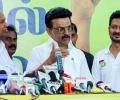
Amid widespread outrage and criticism, and opposition demand for a CBI probe, Chief Minister M K Stalin on Tuesday ordered transferring to the central agency, the investigation into death of Ajithkumar (29), who was picked up by a "special team" for interrogation in connection with a theft case.

The CBI has filed a case against six Jammu and Kashmir police officials for allegedly torturing a fellow constable in custody. The case was registered following a Supreme Court order.

The BJP lawmaker sparked a row when he said, "(the) Supreme Court is taking the country towards anarchy" and that "Chief Justice of India Sanjiv Khanna is responsible for the civil wars taking place in the country".

Justice Khanna, who will serve as CJI for a little over six months, will demit office on May 13, 2025.

The Supreme Court, which is hearing arguments on a batch of pleas seeking legal sanction for same-sex marriage, said on Thursday that the inflow of cases in the apex court is so heavy that it is impossible to list Constitution bench matters unless the time taken to argue is rationed.
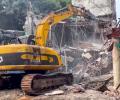
The Supreme Court of India has criticized the Uttar Pradesh government and Prayagraj Development Authority for the demolition of homes in the city, calling the actions "inhuman and illegal." The court ordered the authority to pay Rs 10 lakh compensation each to the homeowners, stating that the demolitions were carried out in a "high-handed" manner without following due legal process. The petitioners, whose homes were demolished, argued that the state government wrongly believed the land belonged to gangster-politician Atiq Ahmed. The Allahabad High Court had previously rejected their plea challenging the demolition.
The Supreme Court of India has reprimanded the central government for failing to implement a cashless treatment scheme for road accident victims. The court expressed its concern over the delay in formulating the scheme, which is designed to provide immediate medical care to accident victims within the crucial "golden hour." The court highlighted that despite a statutory provision requiring the scheme's implementation, the government has not taken any action, prompting the court to intervene. The court also criticized the General Insurance Council (GIC) for raising objections to the scheme and delaying its implementation. The court has now directed the government to notify the scheme within a week and has scheduled a hearing on the matter for May 13.

The judges on the bench are CJI S A Bobde, Justices R Banumathi, Ashok Bhushan, L Nageswara Rao, M M Shantanagoudar, S A Nazeer, R Subhash Reddy, B R Gavai and Surya Kant.
